
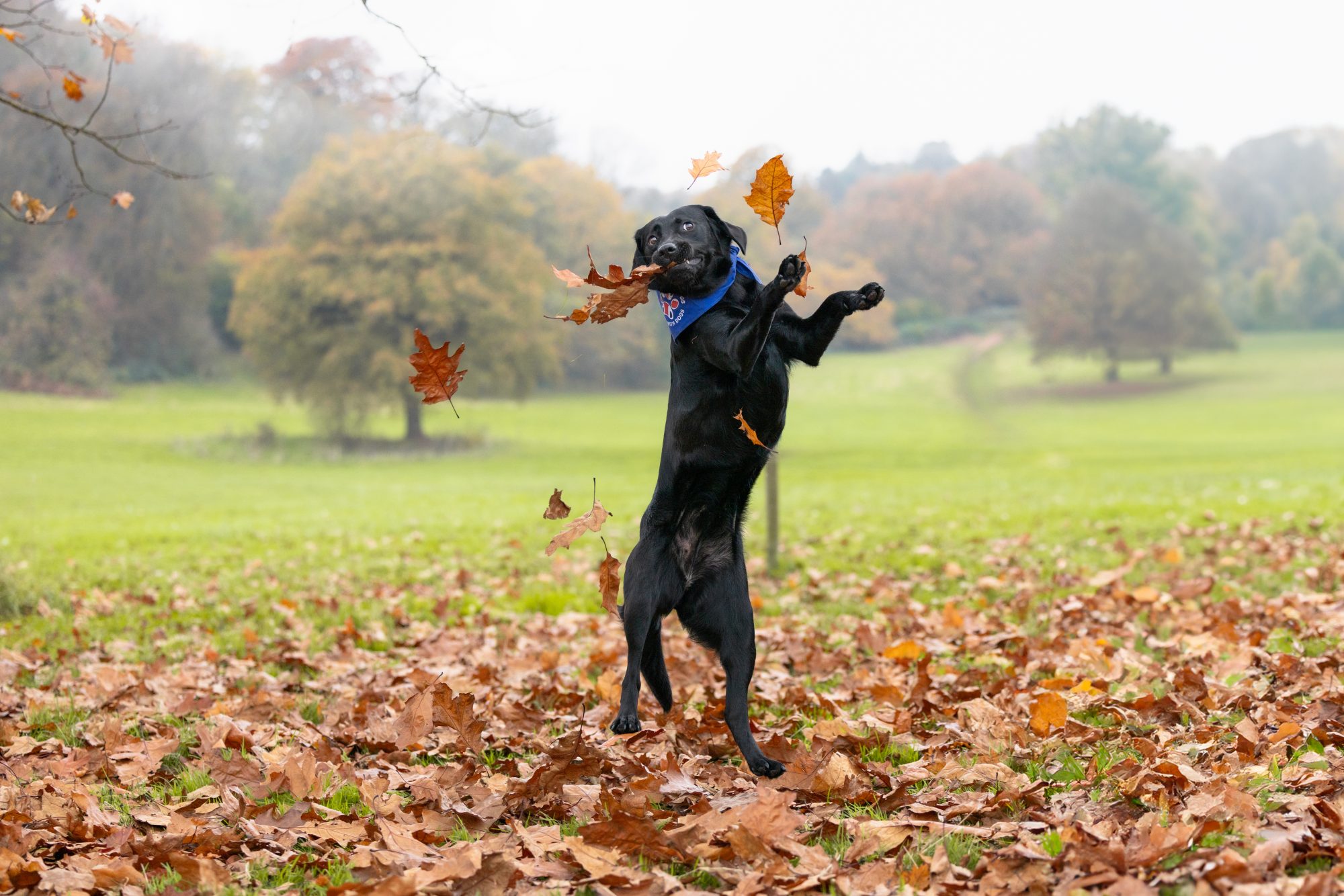
Autumn is a lovely time of year to enjoy walks with our dogs. Cooler temperatures, crisp leaves and all those new smells make it an exciting season for our four-legged friends. However, there are a few seasonal hazards to be aware of.
Stay visible on darker evenings
As the days get shorter, many of us will be walking our dogs in low light or darkness. If you’re walking near roads or in poorly lit areas, make sure both you and your dog can be easily seen.
Reflective coats, harnesses, collars and leads can all help. An LED collar or flashing light can also make your dog much easier to spot.
It’s a good idea to choose well-lit routes where possible and remember to check that your dog’s ID tag is secure and their microchip details are up to date.
Dry your dog after wet walks
Autumn weather often means wet grass, puddles and plenty of mud!
When you get home, give your dog a good rub down with a towel, paying particular attention to their paws, tummy and legs. Wet or muddy fur can become uncomfortable, particularly for dogs with longer coats.
Take a moment to check between their toes and pads too, removing any mud, grit or small pieces of debris that may have become trapped.
Keeping an old towel by the door is always useful during the wetter months!
Be careful with autumn foods
There are plenty of interesting things for dogs to sniff and investigate during autumn, but not everything they find is safe to eat.
Acorns, fallen fruit, fungi and other seasonal items can all cause problems if eaten. Try to discourage your dog from picking up things you can’t identify.

At home, remember that some foods that are perfectly safe for people can be harmful to dogs. Keep human food and leftovers safely out of reach and stick to treats that are suitable for dogs.
Teaching your dog a reliable “leave it” or “drop it” command can be particularly useful during autumn walks.
Watch out for conkers and acorns
Conkers can be very tempting for dogs to pick up and carry, but they can make dogs ill if eaten. Acorns can also be harmful.
Keep an eye on what your dog is picking up during walks, particularly in areas where there are lots of conkers or acorns on the ground. If your dog enjoys carrying things, taking a favourite toy or some suitable treats along can help distract them.
It’s also worth watching out for mushrooms, fallen fruit, litter and discarded food. If your dog eats something they shouldn’t
If you think your dog has eaten something potentially harmful, contact your vet for advice as soon as possible. Don’t try to make your dog sick or give them home remedies unless your vet specifically tells you to.
A little extra care can help keep autumn walks safe and enjoyable for both you and your four-legged companion. So grab your coat, your dog’s lead and a towel for the muddy return home – and enjoy the season!
Preparing Your Dog for Fireworks

As autumn progresses, fireworks season can bring some challenging evenings for our dogs. The loud bangs, flashes and unfamiliar noises can be frightening, even for dogs who don’t normally seem worried by loud sounds.
There are a few simple things you can do to help your dog feel safer:
- Remember, every dog is different. For some, fireworks may be a minor nuisance, while for others they can be genuinely frightening. A little preparation beforehand can make those noisy evenings much easier for both you and your four-legged friend.
- Create a safe space: Set up a quiet, comfortable area where your dog can retreat. Their bed, favourite blanket and some familiar toys can help make it feel secure.
- Keep windows and curtains closed: This can reduce both the noise and flashes of light.
- Put some background noise on: Television, radio or calming music can help mask some of the sounds outside.
- Walk before dark: Try to give your dog their main walk earlier in the day, before fireworks are likely to start. Always make sure doors and gates are secure when letting them outside.
- Stay calm: Dogs can pick up on our emotions. Try to behave normally and calmly, offering reassurance if your dog seeks you out.
- Don’t force interaction: If your dog wants to hide, let them. Give them space and allow them to come to you when they’re ready.
- Speak to your vet if your dog is very frightened: If your dog becomes extremely distressed during fireworks, your vet can discuss ways of helping them before fireworks season begins.


